La Cotte Farm: Three Centuries in the Valley
Few properties in the Franschhoek valley carry the weight of history that La Cotte does. Awarded to Huguenot refugee Jean Gardiol in 1694 — just a few years after the first Huguenots arrived at the Cape — it is one of the oldest continuously occupied farm sites in South Africa, and parts of its original ring-wall still stand.
The Huguenot Grant
Jean Gardiol received La Cotte as part of the land grants made to the Huguenot settlers in the Drakenstein valley in the 1690s. Like many of his fellow refugees, he came to the Cape seeking religious freedom and found, in this mountain-ringed valley, the conditions for a new beginning. The farm he established would survive for centuries.
The Hugo Family and the Victorian Transformation
From 1844, La Cotte was owned for more than a century and a half by the Hugo family — one of the most prominent Huguenot-descended families in the valley. The original homestead was built in the T-shape plan typical of Cape Dutch domestic architecture. Over time, under the Hugos and subsequent owners, the house was Victorianised: the clean lines of the Cape Dutch gave way to the decorative detailing of the nineteenth century.
The Watermill
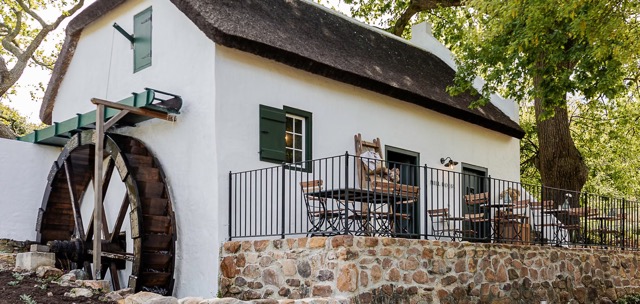
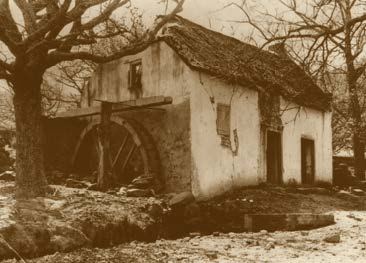
Among the most remarkable survivals on the property is the watermill, erected in 1721 to grind domestic corn. Watermills were once common across the Cape landscape, essential features of self-sufficient farming life, but few have survived. La Cotte's mill is among the exceptions. It was restored in 1989 by the Franschhoek Conservation Trust in association with Franschhoek Vineyards — an act of preservation that ensures this working piece of history can still be understood in its original context.
Today
Africa's oldest mill it is the home of an award winning patisserie. La Cotte Farm is a reminder that the Franschhoek Valley's story didn't begin with wine tourism. It began with families, fields, and the slow turning of a mill wheel on a mountain stream.