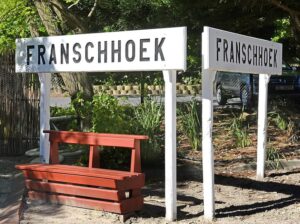
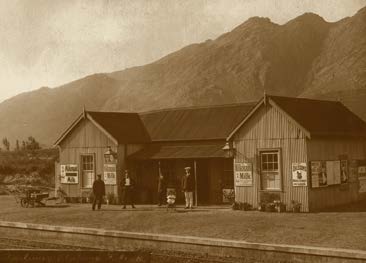
Franschhoek Station: End of the Line Since 1904
At the foot of Huguenot Road, where the village meets the mountains, stands Franschhoek's railway station — a graceful Cape Dutch Revival building that speaks quietly of an era when the arrival of the railway changed everything.
A Line Completed, a Building Replaced
The railway reached Franschhoek in 1904, and shortly after its completion, a corrugated iron station building was erected to serve travellers. It was functional, but it was not built to last. By 1916 it had been torn down, re-erected in Daniel Hugo Street as a home — a practical repurposing that was common in the era — and replaced by the current station building that stands today.
The new building was designed in the Cape Dutch Revival style, with an elegance that sets it apart from the purely utilitarian structures of the railway age. Its architecture is reminiscent of the work of Sir Herbert Baker, the celebrated architect who shaped so much of South Africa's built landscape in the early twentieth century.
The End of the Line
As Franschhoek was the terminus of the railway, the station once had a turning circle behind it — a relic of the mechanics of steam travel and the operational needs of the line. That feature has since been lost to development, a reminder that not all heritage survives.
What does survive is the station building itself: composed, confident, and characteristic of a moment when Franschhoek was being connected to the wider world while remaining very much its own place.
Today
The old station building is now home to the Franschhoek Station Pub and Craft Bar, where visitors can enjoy a meal on the very platform where travellers have come and gone for over a century. Inside, the walls carry the warmth of generations of arrivals and reunions.